What is digital impression taking?
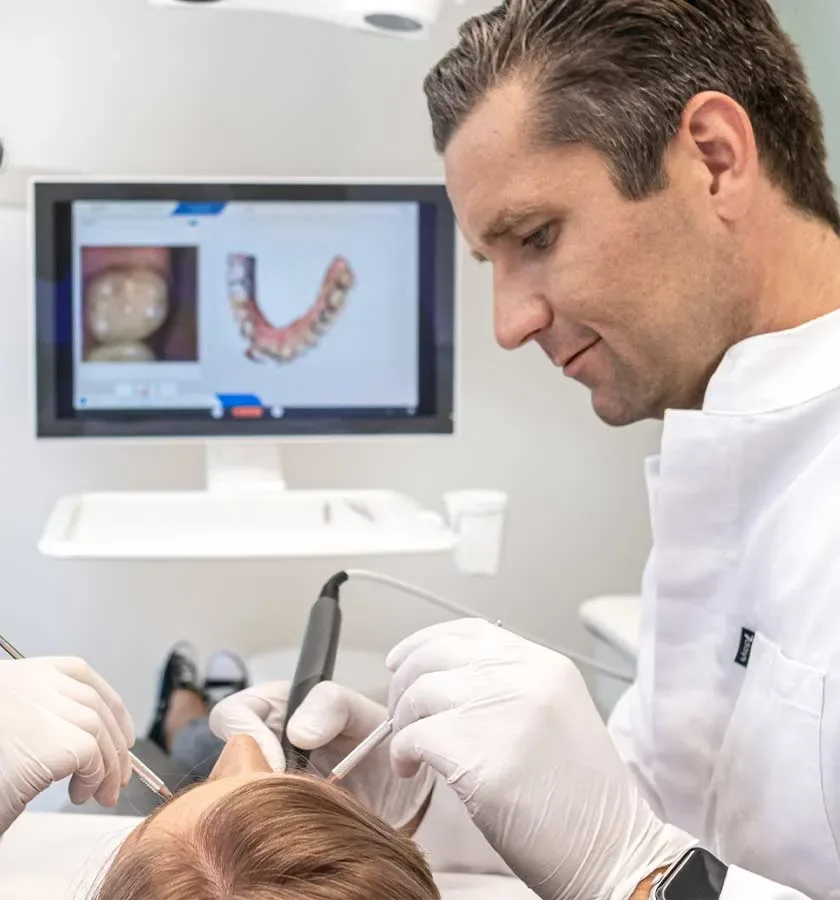
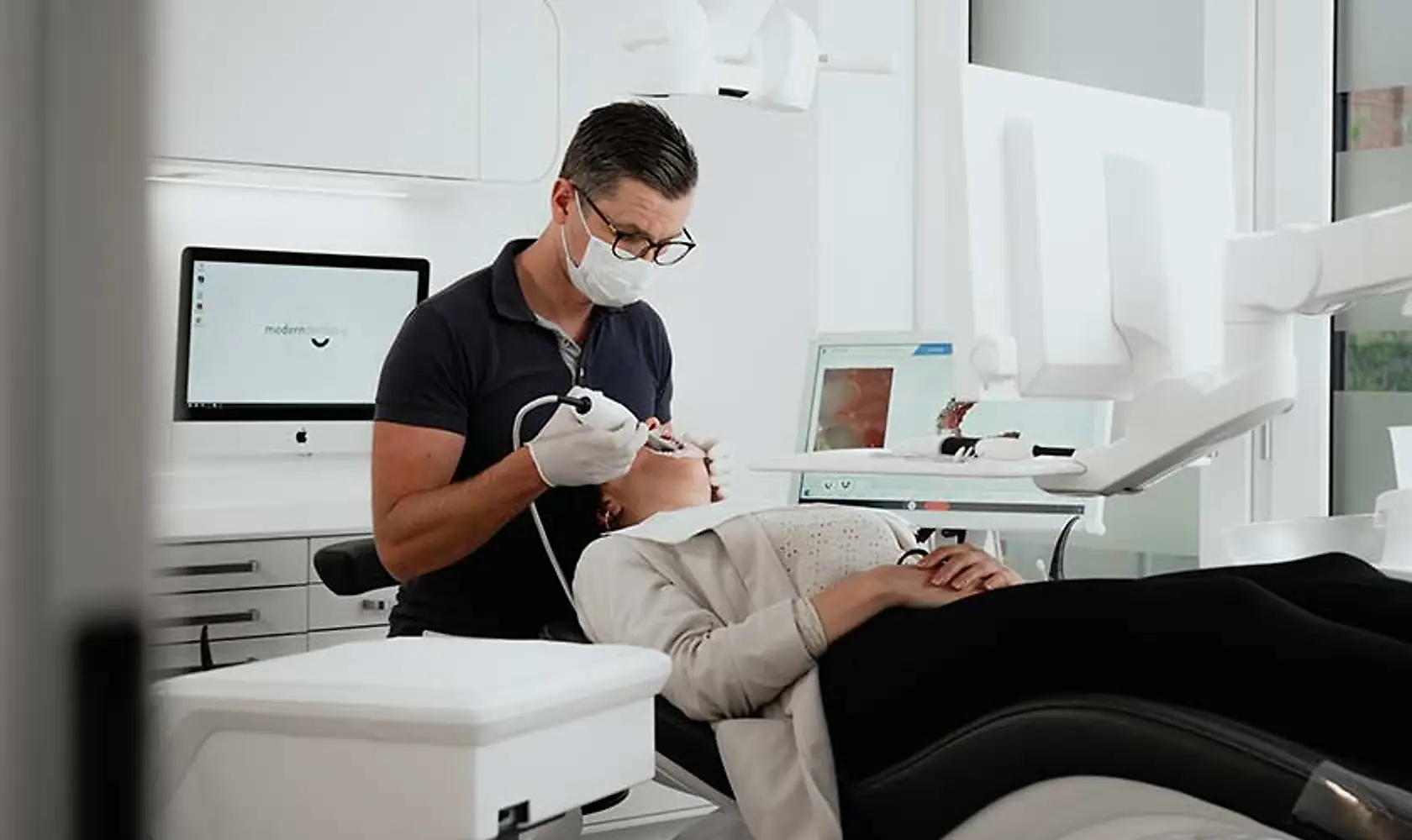
Digital impression taking is a state-of-the-art procedure in which we use an intraoral scanner to create three-dimensional images of your teeth and jaw. Digital impressions are based on advanced 3D imaging technology, which enables us to create high-resolution, accurate representations of your teeth. This method uses optical technology to capture precise data about your oral structures and convert it into a detailed digital model. Unlike conventional impressions with silicone material, our intraoral scanner works without contact and generates immediately usable digital data. This data can be viewed, edited, and used for further treatment planning right away. The resulting 3D models offer significantly higher precision than traditional plaster models. At modern dentistry, we use digital impressions as the basis for various dental treatments. The captured data enables us to analyse your individual oral situation in detail and develop customised treatment solutions. Even the smallest changes to your teeth can be detected and documented. This technology is state-of-the-art and is continuously being further developed to offer our patients the most modern treatment available.
For which dental treatments is the intraoral scanner used in Leipzig?
The intraoral scanner has a wide range of applications at modern dentistry and covers almost all areas of modern dentistry. We primarily use digital impressions to produce high-quality dental prostheses. Whether crowns, bridges, or partial dentures—digital impressions enable our dental technicians to produce perfectly fitting restorations.
The intraoral scanner plays a particularly important role in implantology. Dr Niels Hoffmann uses the precise digital data for the exact planning of implant positions and the fabrication of implant-supported superstructures. The technology enables us to visualise the subsequent prosthetic restoration even before implantation.
Our intraoral scanner also proves to be a valuable tool in orthodontic treatments. We can create precise models for the manufacture of bite splints, retainers, or other orthodontic appliances. Other areas of application include the diagnosis of misaligned / crooked teeth, the analysis of bite relationships, and the manufacture of sports mouthguards.