What is bruxism and why do we grind our teeth?
Bruxism describes the involuntary rubbing, clenching or grinding of the teeth. Dentistry distinguishes two forms: sleep bruxism, which occurs unconsciously at night, and awake bruxism – unnoticed clenching of the jaw during the day, for example when concentrating or under tension.
The most common cause is psychological stress. Emotional strain, pressure to perform or inner tension is discharged through the masticatory system – often without those affected noticing. In addition, uneven rows of teeth, poorly fitting dentures or so-called craniomandibular dysfunction (CMD) – a malfunction of the masticatory system – can act as triggers. For targeted therapy it is essential to know the individual cause. That is exactly where every treatment at our practice begins.
What are the consequences of untreated teeth grinding?
The forces acting on the teeth during grinding are enormous – estimates suggest pressures of up to 800 kg/cm². For comparison: normal chewing pressure when eating is considerably lower.
In the long term, untreated teeth grinding leads to gradual abrasion: the enamel is worn away, fine cracks form and the teeth become increasingly sensitive to temperature. The consequences are rarely limited to the mouth, however. Chronic overloading of the masticatory muscles can trigger pain in the temporomandibular joint, tinnitus, headaches, migraine and even back complaints. What at first looks like a dental problem is often a broader physical imbalance. This is why early treatment of teeth grinding matters so much.
The solution: how does a night guard help?
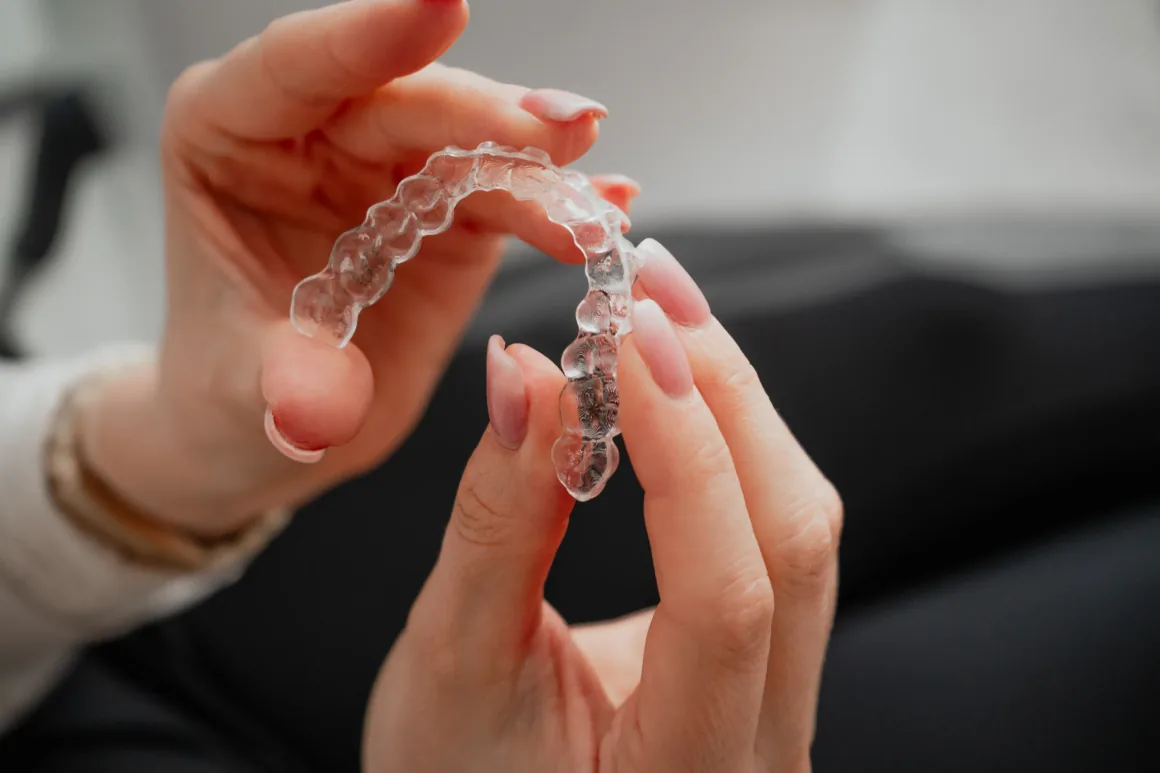
A professionally fitted guard against teeth grinding does not remove the underlying stress – but it interrupts the damaging cycle. Acting as a buffer between the upper and lower jaw, the guard helps to protect the tooth substance, relieves the temporomandibular joints and can reduce automatic muscle tension through a biofeedback effect.
Worth knowing: cheap guards from the pharmacy or the internet, so-called boil-and-bite products, are not an alternative. They often fit inaccurately, can alter the bite relation and in some cases even make the problem worse. A bite guard that genuinely protects is made individually for your jaw – that is the decisive difference.