What is sports dentistry?
Sports dentistry is a specialised field of dentistry that deals with the specific dental requirements of athletes. This discipline goes far beyond mere tooth protection and considers the entire mouth and jaw area as an important factor in athletic performance.
At our modern dentistry practice, we take a holistic approach to sports dentistry. We not only analyse potential risks for dental injuries, but also your jaw position and bite.
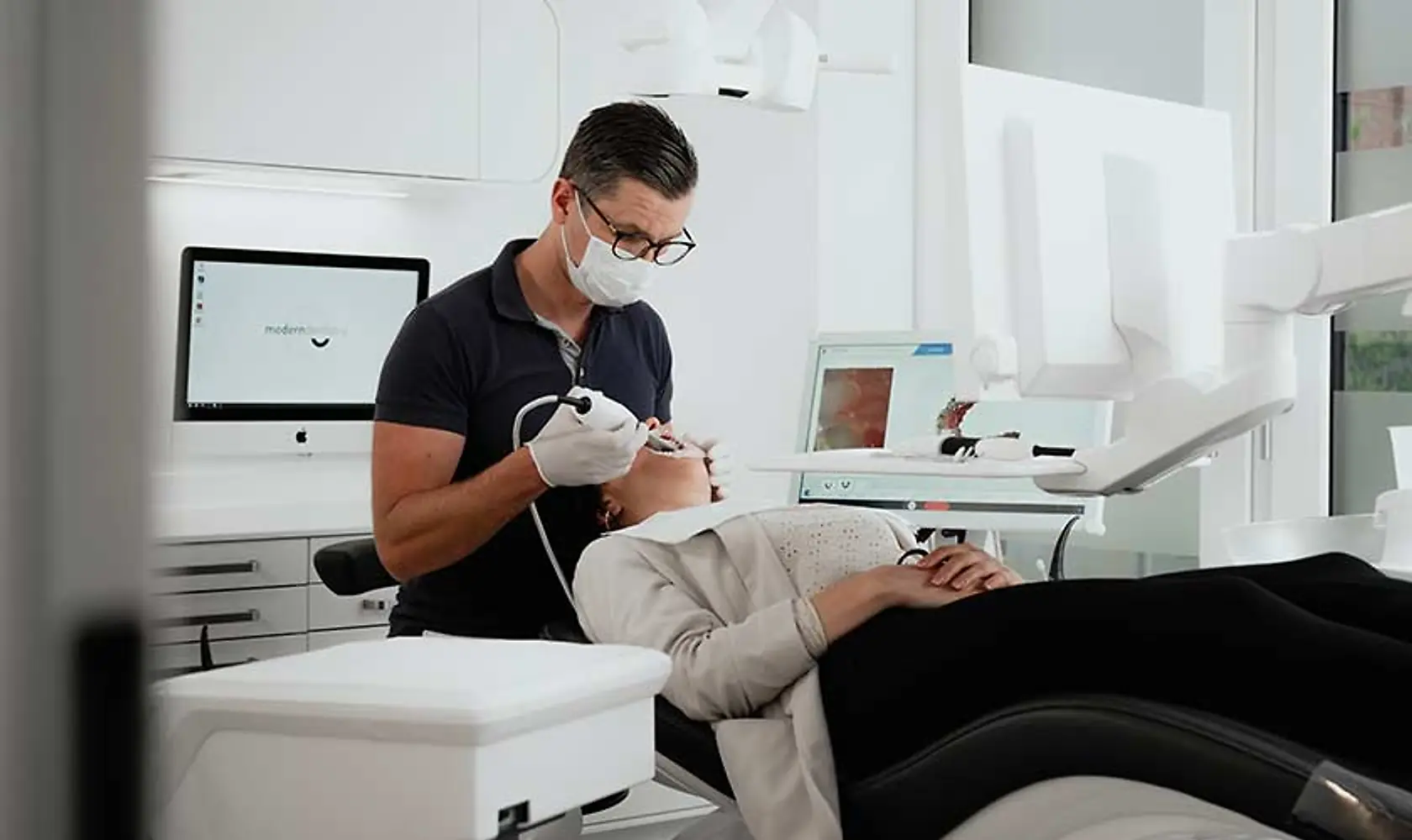
Our range of services includes preventive measures such as pre-season check-ups, therapeutic approaches to dental trauma, and aids such as performance splints and regeneration splints. Dr Niels Hoffmann draws on his many years of experience to develop the optimal solution for each athlete.
What are the benefits of sports dentistry for athletes?
The benefits of sports dentistry extend across various areas of athletic activity. First, it offers effective protection against injuries to the mouth and jaw area, which can occur frequently, especially in contact sports.
In addition, we make performance splints that aim to improve posture and power transmission by changing the jaw position. Many of our patients report a noticeable improvement in their stability and balance after treatment.
Another significant advantage is prevention. Through regular pre-season checks, we can identify and treat potential problems early on before they negatively affect your athletic performance. Regeneration splints are also intended to support nighttime recovery by relieving the masticatory muscles.
What are the benefits of a pre-season check?
The pre-season check-up is a comprehensive dental examination that is ideally carried out before the start of a new season. This specialised diagnosis goes far beyond a normal check-up and focuses on the specific needs of athletes.
During this examination, we not only check the general condition of your teeth and gums, but also analyse your temporomandibular joints, masticatory muscles, and bite position. Dr Niels Hoffmann pays particular attention to hidden inflammation in the mouth.
An important part of the pre-season check is the evaluation of existing fillings and dentures for their resilience during sporting activities. In addition, we advise you on preventive measures such as the fitting of an individual sports mouthguard or performance splints. The investment depends on the scope and can save you costly downtime and injuries.
How does a custom sports mouthguard help me?
A custom sports mouthguard offers significantly better protection than standard versions available from sports stores. At our modern dentistry practice, we manufacture each sports mouthguard based on a precise impression of your teeth, ensuring an optimal fit and maximum comfort.
The way it works is based on the even distribution of impact forces across the entire row of teeth. In the event of a blow or fall, the special material absorbs the energy and can thus reduce the risk of broken teeth, tooth loss, or injuries to the soft tissue in the mouth.
Dr Niels Hoffmann takes the specific requirements of your sport into account when manufacturing the mouthguard. Contact sports such as rugby or boxing, for example, require thicker materials than ball sports. The cost of a professional sports mouthguard varies depending on your individual needs and is a sensible investment in your long-term oral health.
What are performance splints and how do they improve athletic performance?
Performance splints are specially designed dental splints that aim to improve athletic performance by optimising jaw position. These innovative aids assume a relationship between jaw position and posture.
Performance splints work by repositioning the Lower Jaw into a physiologically optimal position. The aim of this change is better overall body statics with more balance, strength development, and endurance.
After using performance splints, many athletes report increased stability during training, improved concentration, and less fatigue in the neck and shoulder muscles. At our modern dentistry practice, Dr Niels Hoffmann performs a detailed analysis of the temporomandibular joints before fabrication. The investment in performance splints depends on your individual needs.
Dental trauma refers to injuries to the teeth, gums, or jawbone caused by external force. In sports, dental trauma is one of the most common injuries, especially in contact and ball sports.
There are many causes of dental trauma in sports: falls, collisions with other athletes, blows from sports equipment, or hard balls can lead to injuries of varying severity. Dental trauma can take many forms: the spectrum of possible injuries ranges from small chips in the enamel to tooth fractures and even complete tooth loss.
The treatment of tooth trauma often requires quick action. At our modern dentistry practice, Dr Niels Hoffmann treats tooth trauma using modern procedures based on the latest scientific findings. Depending on the severity of the injury, various therapeutic approaches are used: from simply smoothing rough edges to complex reconstruction of severely damaged teeth.
What should I do in the event of acute dental trauma?
In the event of acute dental trauma, quick and correct action is crucial for successful treatment. Contact our moderndentistry practice or the dental emergency service immediately to ensure immediate care.
What are regeneration splints and how do they improve recovery?
Regeneration splints are specially designed dental splints that are worn during rest periods, especially at night, to optimise recovery for athletes. These innovative aids aim to relieve tension in the masticatory muscles and promote a relaxed jaw position.
Regeneration splints work by relieving pressure on the temporomandibular joints and masticatory muscles. Many athletes tend to unconsciously clench or grind their teeth, especially after intense training sessions. Wearing regeneration splints promotes a physiologically relaxed jaw position.
At our modern dentistry practice, Dr Niels Hoffmann customises regeneration splints to your individual needs. Many of our patients report a noticeable improvement in their recovery and reduced tension in the neck and shoulder area. The investment in regeneration splints depends on your individual needs.